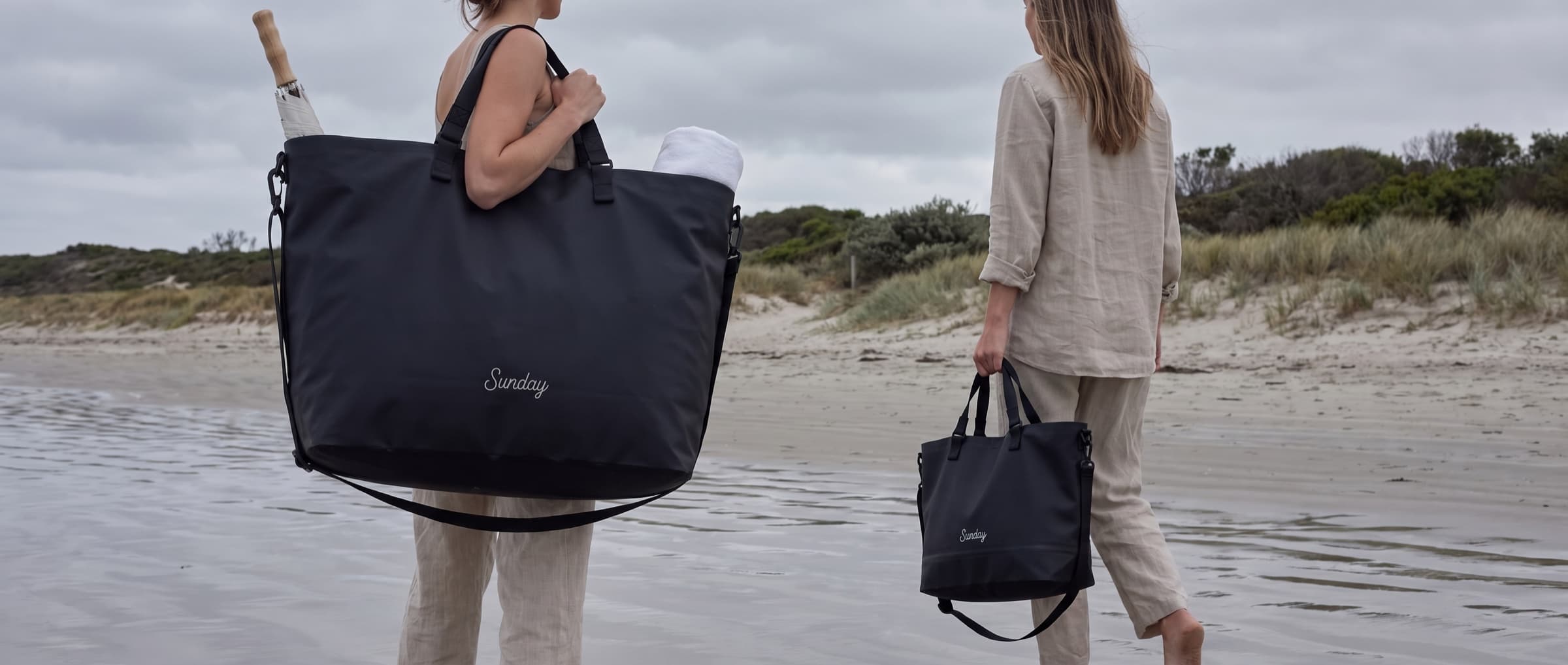
A beach bag with a bottom that opens.
Thirty litres of 840D TPU-coated nylon, welded shut instead of sewn. Unzip the base, and the sand goes back where it came from.
Where does the sand actually go?
out through a fixed mesh floor
Is the fabric actually waterproof?
840d tpu-coated nylon, welded seams
Sunscreen, jam, salt water?
wipes off. the face is non-porous
Three sizes. One material.
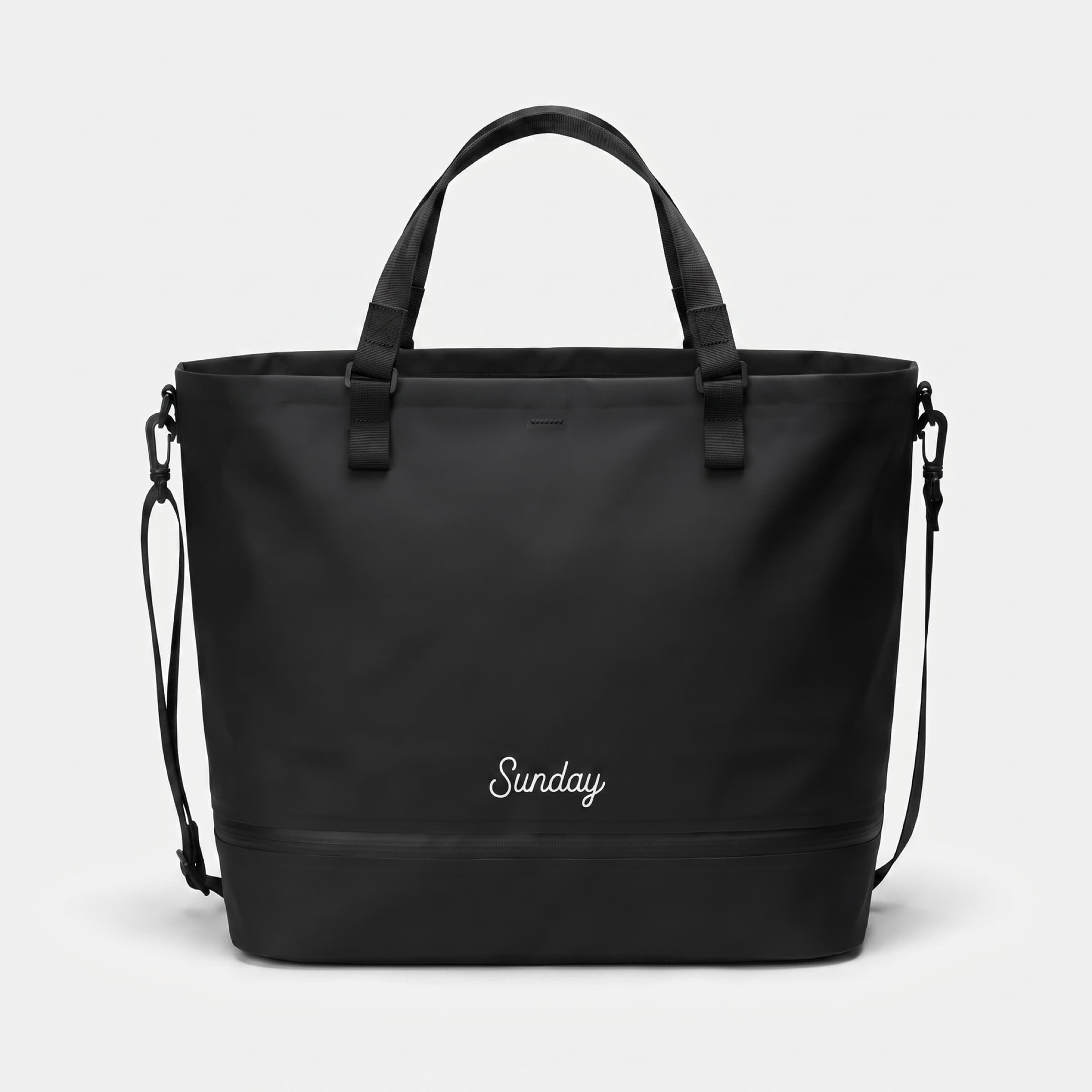
The Sunday Tote
30 L · The everyday
The only bag in the line with the zip-off base. Unzip, and walk away.
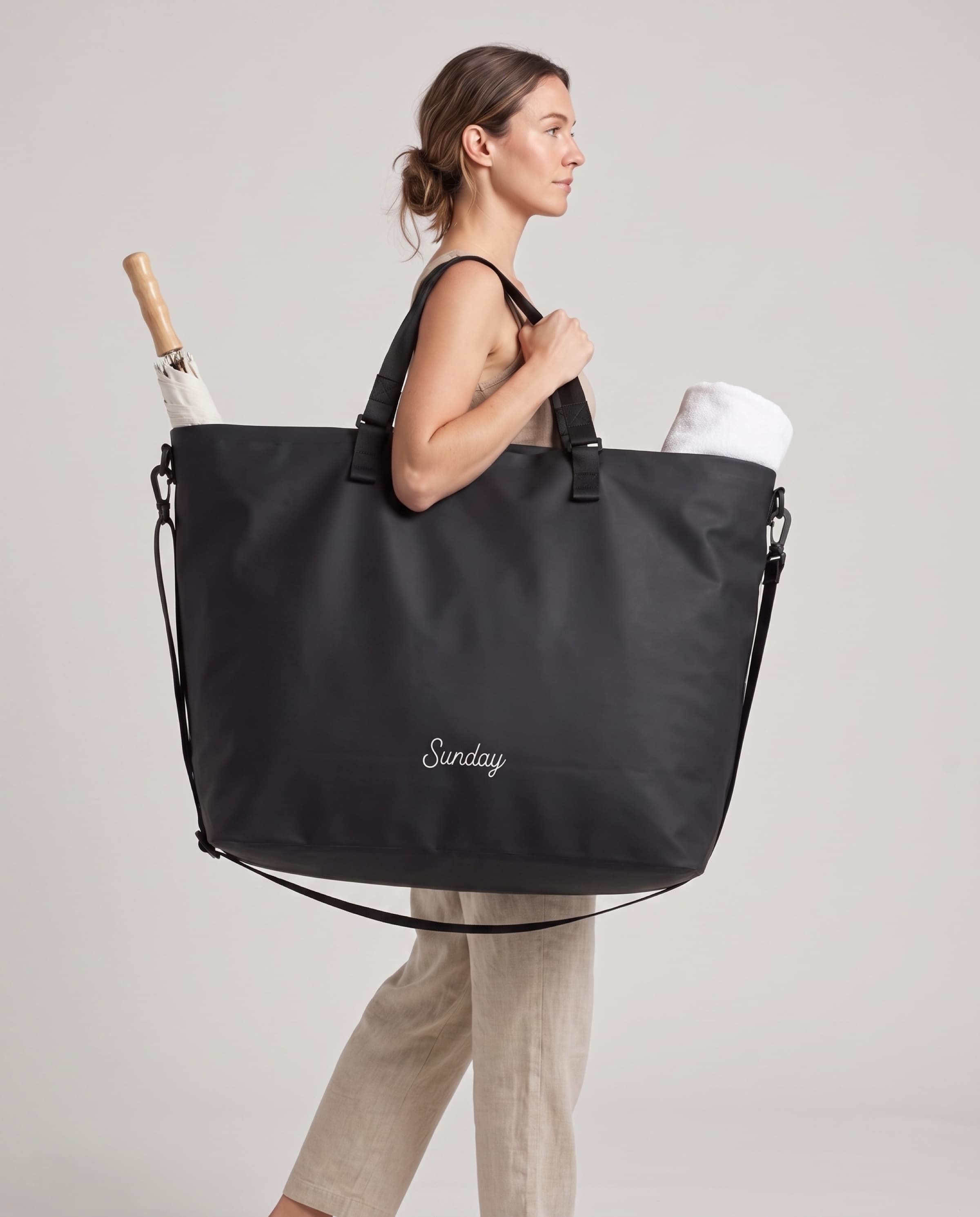
The Sunday Tote XL
80 L · The one-tripper
Umbrella, chairs, four towels and the cooler. In one hand, in one go.
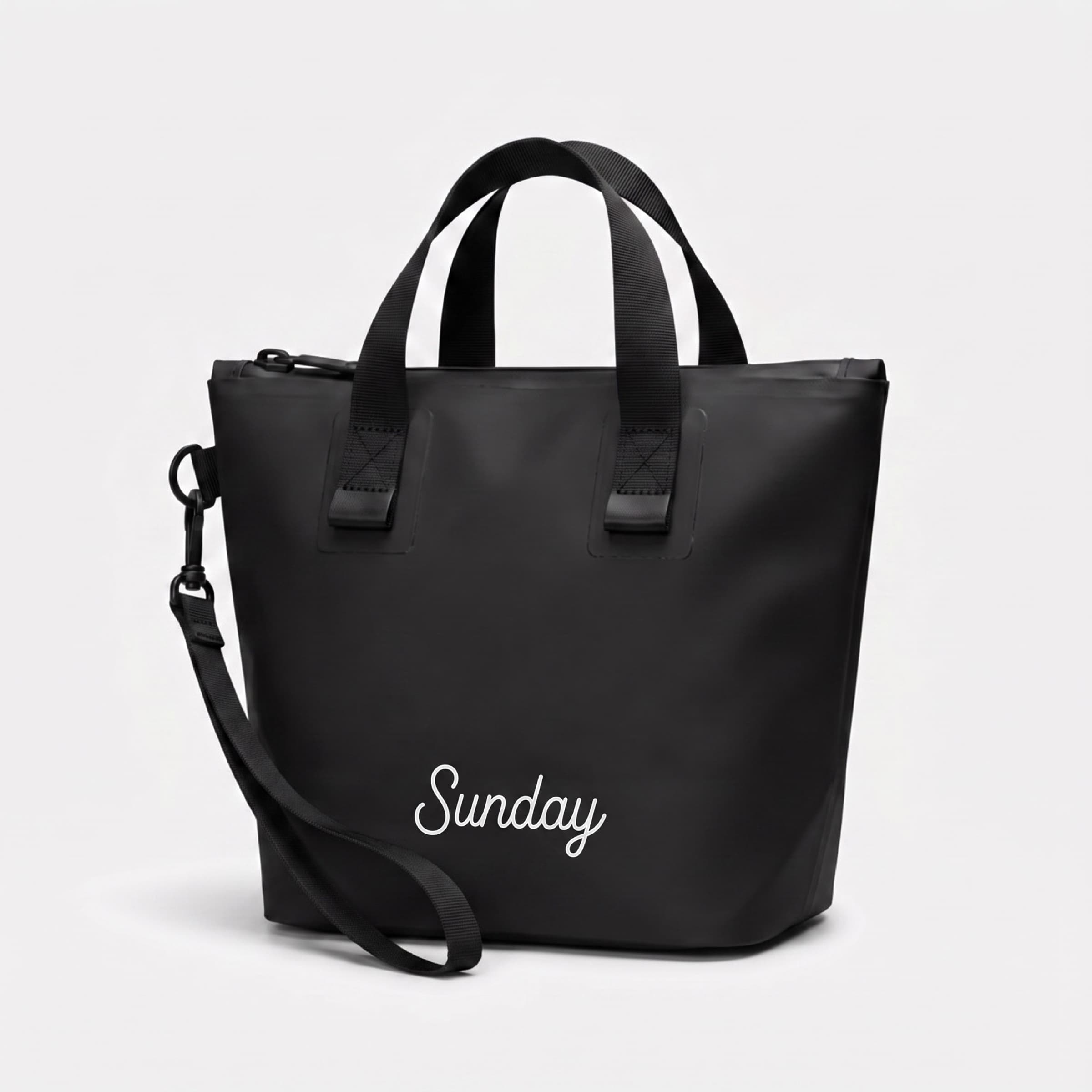
The Sunday Tote Mini
5 L · The swim bag
The bag you take when you leave the bag. Phone, keys, cards, on your wrist.
Most beach bags are made of the wrong stuff.
Nearly every beach tote is canvas, straw or cotton. They soak up water the moment they touch it, and they hold onto sand for good. Wet stays wet. Sandy stays sandy.
So we started with the material. The Sunday Tote is cut from 840D TPU-coated nylon, the fabric of whitewater dry bags, with welded seams instead of stitches. Water beads. Sand slides. Sunscreen wipes off.
Then we gave it a bottom that unzips, so sand, spills and whatever else found its way in falls straight out. Easy to clean. Hard to wear out. Made to last.
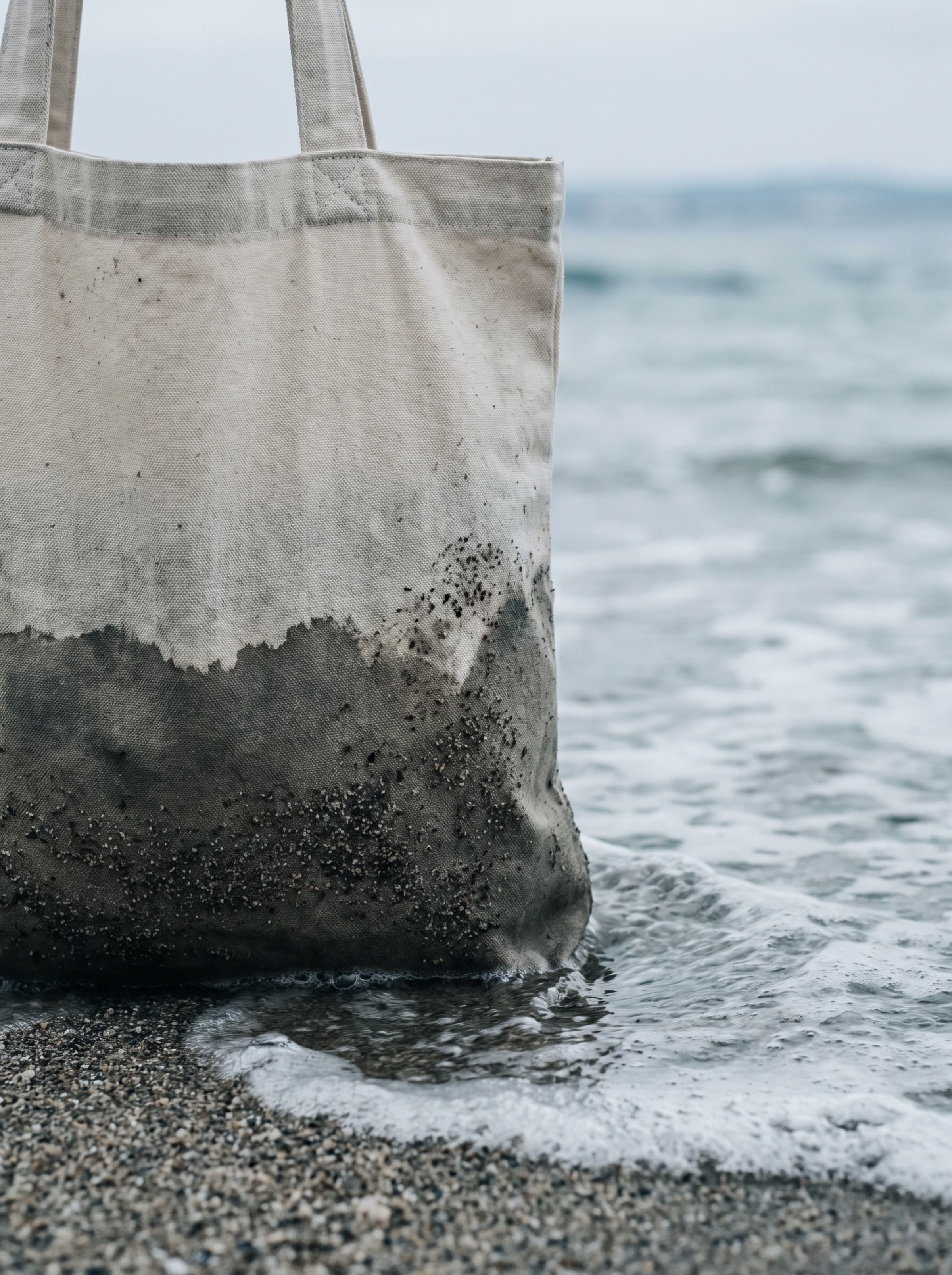
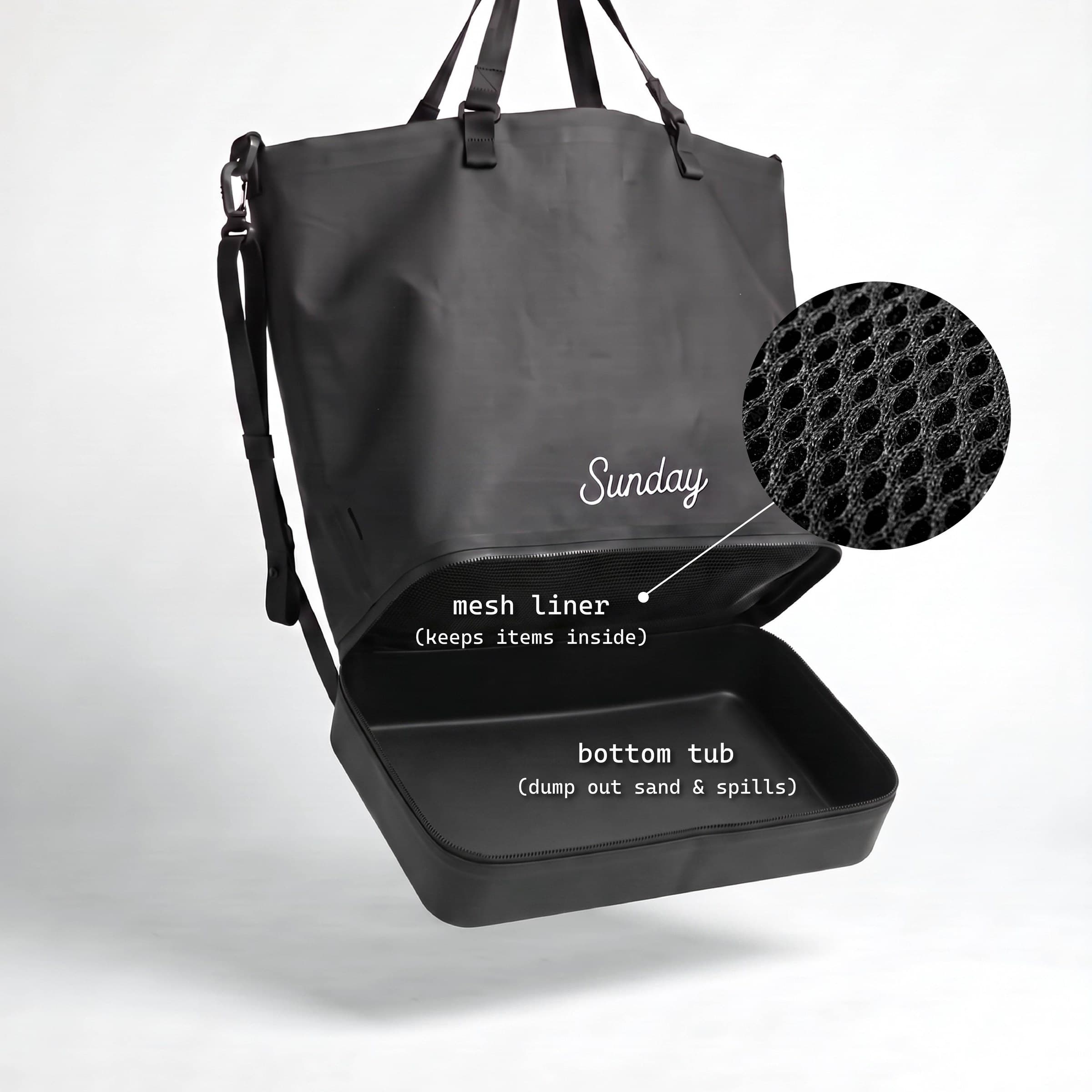
The sand goes. Everything else stays.
The base of the Sunday Tote is a rigid panel on a waterproof zip. Unzip it and it swings open on its hinge, still attached. Above it is a fixed mesh floor that your things rest on. Sand falls through the mesh. Towels, books and sandals don’t.
Unzip it over the sand and it empties right there. At the beach, not in your kitchen.
Can the base panel come off?
no. hinged, stays attached
Will my things fall out?
the mesh floor is fixed. it never opens
Is the base zip waterproof?
yes. welded seat, full perimeter
We took the fabric from a whitewater dry bag and made a tote out of it.
840D TPU-coated nylon is what serious dry bags are made of. The 840 is denier, a measure of yarn weight. For scale, a decent backpack is around 400D and a heavy-duty duffel is around 1000D. It is a thick, dense weave, and on its own it would soak like any other nylon.
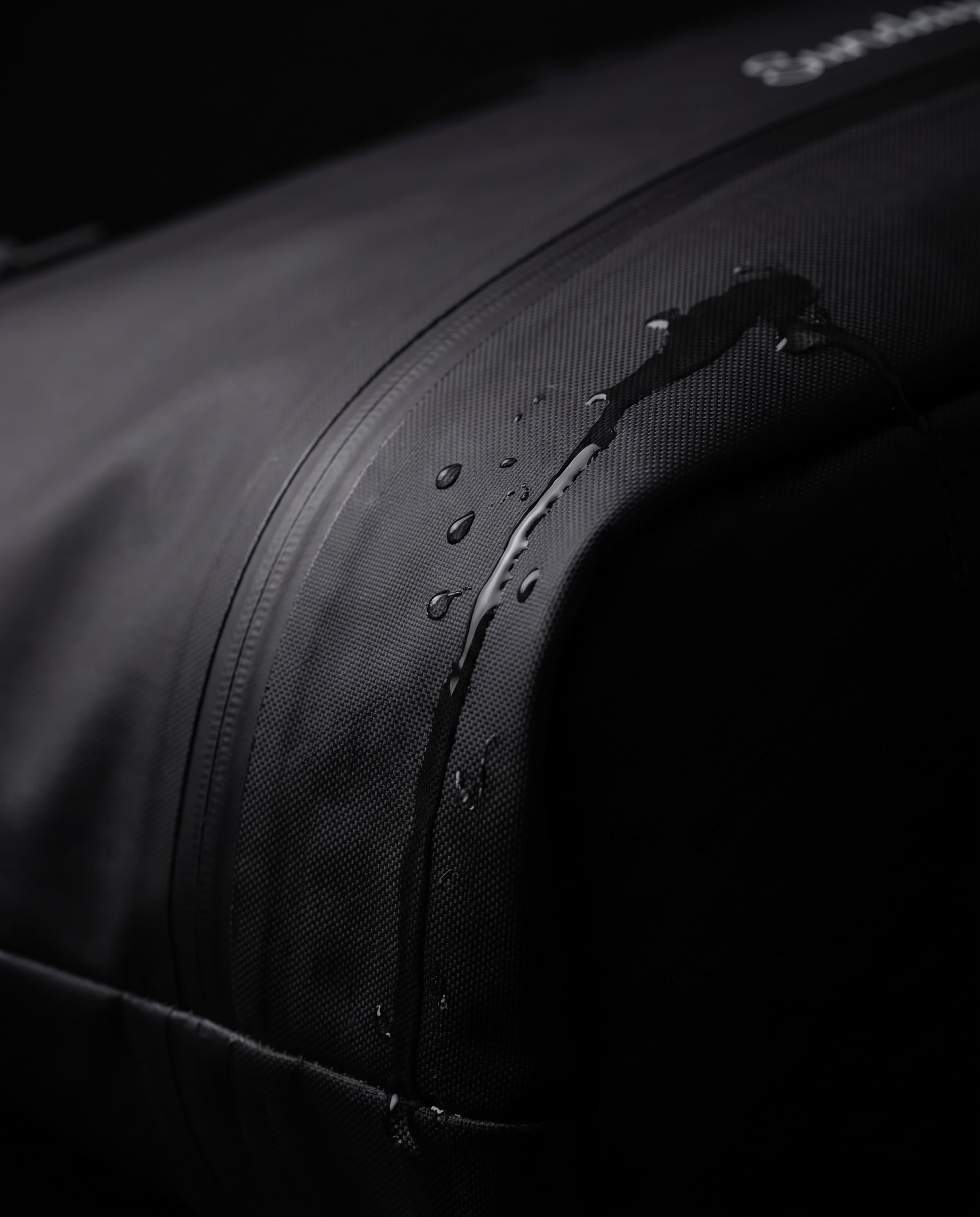
The coating is what makes it a dry bag. Thermoplastic polyurethane is laminated onto the face, so the surface a wave hits is not fabric at all, it is a continuous non-porous film. Sunscreen sits on top of it. So does jam, sand, engine oil and salt. You wipe it with a wet cloth and it is finished.
And because the panels are welded rather than sewn, not one seam that has to keep water out has a needle hole in it. Heat and pressure fuse two pieces of coated fabric into one piece, so there is nothing to fray and nothing to wick. The handles are the exception, and deliberately so: webbing is bar-tacked on, because a strap carrying twenty pounds of wet gear should be stitched. Those stitches sit high on the body, well above the waterline. Welding is a slower way to build a bag and it costs more, which is the reason most beach bags are still sewn.
Start with the 30 L. The other two do different jobs.
The 30 L is the bag. The 80 L is what you take when there are four of you and a cooler. The 5 L is what goes on your wrist when you actually get in the water.
Compare all three side by side